When contractors talk about "good bricks vs bad bricks," they are usually describing the kiln technology behind the product. The two most common kiln types in North India are the Bull's Trench Kiln (BTK) and the Zigzag Kiln. The difference in output quality is significant.
How Bull's Trench Kilns Work
Traditional BTK kilns use a circular or oval trench design where bricks are fired by moving coal through the stack. Temperature control is limited — the person feeding coal manually adjusts the fire based on experience, not measurement. This produces uneven firing: some bricks are underfired (soft, high water absorption), others are overfired (brittle, distorted).
How Zigzag Kilns Work
Zigzag kilns (mandated by HSPCB and other pollution boards since 2018) use a zigzag air flow path through the brick stack. This design:
- Ensures uniform heat distribution across all bricks in the chamber
- Reduces coal consumption by 15–25% per 1,000 bricks
- Cuts particulate emissions significantly (hence the regulatory mandate)
- Produces more consistent compressive strength across batches
Side-by-Side Comparison
| Property | Zigzag Kiln | Bull's Trench Kiln |
|---|---|---|
| Firing uniformity | High (consistent airflow) | Low (manual control) |
| Compressive strength | 50+ kg/cm² typical | 25–50 kg/cm² (variable) |
| Dimensional consistency | ±2–3mm | ±5–10mm |
| Water absorption | 12–16% | 15–22% |
| Environmental compliance | HSPCB approved | Often non-compliant |
| Batch-to-batch consistency | High | Low |
What This Means on Site
Inconsistent bricks mean inconsistent mortar joints, unexpected load distribution, and increased wastage from cutting oversized or unusable bricks. For multi-storey construction, dimensional inconsistency compounds floor by floor.
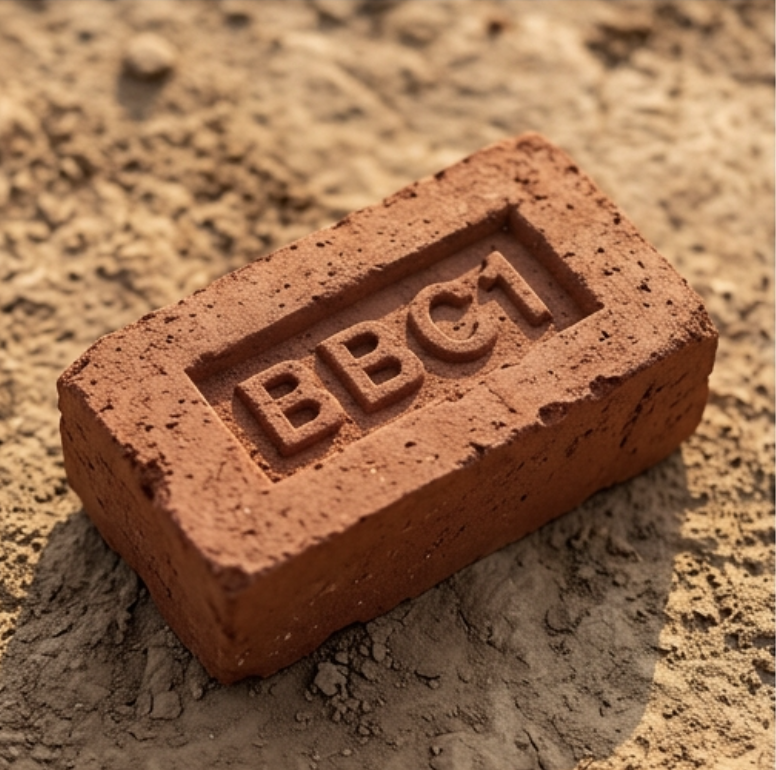
BBC1 operates a single HSPCB-certified Zigzag kiln in Bhuna, Haryana with documented batch consistency.