Walk past any well-managed construction site and you will see a soaking pit near the bricklaying area. This is not optional — it is a fundamental quality requirement that directly affects wall strength.
What Happens When You Lay Dry Bricks
Burnt clay bricks are porous. A dry brick rapidly absorbs water from the mortar it sits on. This causes:
- Weak mortar joints: Cement needs water to hydrate and develop strength. When the brick steals that water, the mortar never reaches design strength
- Poor adhesion: The mortar-brick bond is weaker, leading to cracks and gaps over time
- Premature setting: Mortar stiffens too fast, making it difficult for masons to level and align bricks
Correct Soaking Procedure
- Immerse bricks in clean water for minimum 2 hours before use — overnight is ideal
- Remove from water and allow surface moisture to evaporate for 20–30 minutes
- Bricks should be damp throughout but surface-dry when laid
- Do not use bricks that are dripping wet — excess surface water weakens the mortar bond
How Much Water Do Bricks Absorb?
IS 1077 allows maximum 20% water absorption by weight. BBC1 Zigzag kiln bricks typically absorb 12–16%, which is ideal — enough porosity for good mortar adhesion without excessive water theft.
Soaking Pit Setup
On site, set up a shallow pit or trough near the bricklaying area. A lined pit of 3m × 2m × 0.5m can soak 400–500 bricks at a time — enough for one mason's daily output. Rotate batches: soak the next batch while laying the current one.
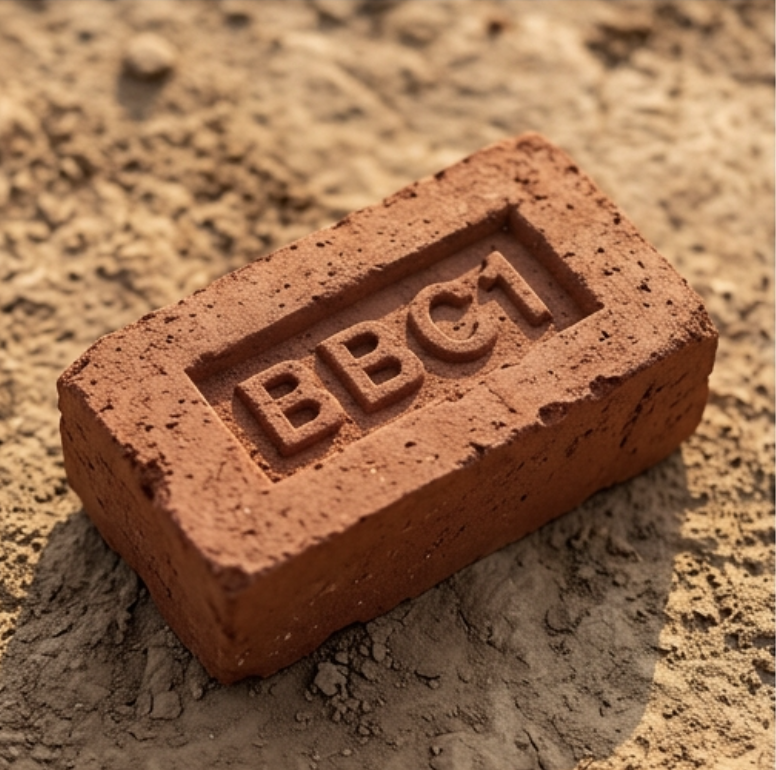
BBC1 bricks are wire-cut with controlled porosity, meaning they soak uniformly. For questions on handling, call +91 97280 65410.